

How to Open a Bar: The Complete Framework
Opening a bar is not a single decision. It is a sequence of dozens of decisions, each of which can sink the venue if handled wrong. This page lays out the complete framework – the concept work, the business plan, the location analysis, the licensing sequence, the build-out, the hiring, the soft opening, and the first ninety days of operation. It is built from 20+ years of opening and turning around bars, and it is the foundation that every other piece of content on opena.bar builds on.
If you are early in the process, start here. If you are further along, use this page to identify which phase you are in and which specific pillar – business plan, checklist, startup costs, staffing – needs your attention next.
The Six Phases of Opening a Bar
A bar opening moves through six distinct phases. Each phase has specific decisions, specific deliverables, and specific failure modes. Phases overlap at the edges but have clear primary focus:
- Phase 1: Concept development (months 18 to 12 before opening)
- Phase 2: Planning and funding (months 12 to 6 before opening)
- Phase 3: Location and lease (months 9 to 6 before opening)
- Phase 4: Licensing and build-out (months 6 to 2 before opening)
- Phase 5: Staffing and soft opening (months 2 to 0 before opening)
- Phase 6: First ninety days of operation
Most failed bar openings fail because a phase was skipped or shortchanged. Concept work compressed into a weekend. Planning work done in parallel with licensing instead of before it. Build-out started before lease terms were finalized. Staff hired too late to be trained. The sequence matters. Getting phases out of order is expensive; skipping them is worse.
Concept Development
The concept is the answer to one question: what kind of bar are you opening, and why does your market need it? Everything else flows from this answer.
Defining the Concept
A complete concept definition covers:
- Venue type: neighborhood bar, cocktail lounge, sports bar, dive, gastropub, bar and grill, nightclub-adjacent
- Primary customer: who specifically comes here, why, and what they pay for
- Positioning: what makes this venue different from the three closest competitors
- Price point: average ticket and how it compares to the local market
- Operational hours: when open, when busy, when quiet
- Atmosphere: lighting, music, density, vibe
Concepts that can be articulated in one paragraph tend to execute well. Concepts that require five paragraphs to explain tend to get confused during execution. If you cannot explain your concept to a commercial landlord in 60 seconds, it is not yet ready for Phase 2.
Market Validation
Concept validation is the process of confirming the concept matches a real market opportunity. Practical validation steps:
- Drive your target area and count venues of your type. Are there too few (opportunity) or too many (saturation)?
- Visit successful similar venues in comparable markets. What are they doing right? What are they missing?
- Talk to customers at competing venues. What do they wish existed?
- Check liquor license availability and cost in your target jurisdiction. Some markets have license caps that constrain entry.
- Review local demographic data for the specific neighborhood. Does the customer profile match your concept?
Most founders skip formal market validation. That is a mistake. Three weeks of validation work protects against years of operating a venue that does not match the market.
Planning and Funding
This is where the concept becomes a document. The business plan, the financial projections, the startup cost model, and the funding strategy all take shape.
The Business Plan
A bar business plan is a specific deliverable. It is not a generic small business plan. It addresses:
- Executive summary that captures the concept and the ask
- Market analysis with specific local data
- Beverage and food program definition
- Marketing and customer acquisition plan
- Operations plan including staffing and supplier structure
- Management team section
- Detailed financial projections
- Funding request and use of funds
- Risk factors and mitigation
The business plan serves multiple audiences. Lenders read the financial projections and repayment plan. Investors read the market opportunity and return projections. Landlords read the management team and operations sections. Regulators read the licensing and compliance sections. A well-structured plan covers all audiences in one document.
For the complete, customizable Bar Business Plan – investor-ready and lender-friendly, built specifically for bar founders – see the Bar Business Plan product. For the educational layer on what goes into a bar business plan, see the Bar Business Plan Guide.
Startup Costs and Capital Requirements
Bar startup costs vary dramatically by concept, location, and condition of the space. Broad ranges for informational purposes:
- Small neighborhood bar in an existing bar space: $150,000 to $350,000
- Mid-size bar with significant build-out: $350,000 to $650,000
- Larger bar, restaurant-bar hybrid, or significant renovation: $650,000 to $1,500,000
- High-end cocktail lounge or nightclub concept: $1,000,000+
These ranges are illustrative. Your specific costs depend on local rent, state liquor license costs, equipment requirements, and the condition of the starting space. For the working spreadsheet model that breaks these costs into actionable line items, see the Bar Startup Costs pillar.
Funding Sources
Bar funding typically comes from a combination of sources:
- Owner equity (usually 20-40 percent of total requirement)
- SBA loans (common for first-time bar owners)
- Private investors (silent partners or equity stakes)
- Equipment financing (separate from real estate/build-out)
- Supplier financing (some beverage distributors offer opening support)
The mix matters. Highly-leveraged openings struggle more in the first eighteen months when revenue is building. Well-capitalized openings with reasonable equity cushion can survive slower-than-projected launches.
Location and Lease
Location decisions are the most consequential and least reversible decisions in the opening process. A great concept in a wrong location fails. A decent concept in a right location succeeds.
Location Evaluation
Practical location evaluation covers:
- Visibility and foot traffic patterns at different times of day
- Accessibility - parking, transit, rideshare drop-off
- Demographics of the immediate area (within 1 mile) and trade area (within 5-10 miles)
- Competitive density of similar venues
- Complementary traffic drivers (restaurants, theaters, offices, residential)
- Zoning and liquor license availability for this specific address
- Historical tenant patterns - what was here before, why did they leave
Lease Terms
Commercial leases for hospitality venues have specific terms that matter:
- Base rent and CAM charges
- Free rent during build-out period
- Tenant improvement allowance
- Use clause - does it specifically permit your concept, including late hours and alcohol service
- Exclusivity - can the landlord lease to a competing concept nearby
- Term length with renewal options
- Assignability - can you sell the business with the lease
- Personal guarantees - how much and for how long
Commercial lease negotiation for a bar is a specialized skill. Retain a hospitality-experienced commercial real estate attorney before signing.
Licensing and Build-Out
The longest phase and the phase where most opening delays originate. Licensing and build-out happen in parallel but have different dependencies.
Licensing Sequence
Bar licensing involves multiple separate approvals:
- State liquor license
- Local/municipal liquor license or endorsement
- Business license
- Sales tax permits
- Health department permit (if serving food)
- Building permits for any construction
- Fire inspection and occupancy certificate
- Signage permit
- Music licensing (ASCAP, BMI, SESAC) if playing music
Each has its own timeline, its own requirements, and its own fee structure. Licensing specifics vary significantly by state. For state-specific treatment, see the state pages – Texas and California are covered on opena.bar. For general bar permits and licenses guidance, see the Bar Permits and Licenses cluster page.
Build-Out Dependencies
Build-out has its own critical path. Key dependencies:
- Design and permit drawings before construction begins
- Permit approval before construction begins
- Utility upgrades before interior work
- Plumbing rough-in before bar build
- Electrical rough-in before walls close
- HVAC before final walls
- Finishes before equipment delivery
- Equipment install before health inspection
- Final health inspection before occupancy permit
Most build-out delays come from missed dependencies in this sequence. The Critical Path Checklist pillar covers dependency mapping in detail.
Staffing and Soft Opening
Staffing happens in the final weeks before opening. A well-capitalized bar with a great space and a poor staffing plan still opens poorly.
Hiring Timeline
Working backward from opening day:
- 90 days out: hire general manager
- 60 days out: hire kitchen manager (if food), head bartender, training manager
- 45 days out: hire bartenders, servers, barbacks
- 30 days out: hire support staff, security (if needed)
- 21 days out: begin structured staff training
- 14 days out: complete initial training cycle
- 7 days out: soft opening or friends-and-family events
Staff Training
New bars require structured training, not just orientation. Training covers the menu, the service standards, the POS system, the venue-specific protocols, and critically, responsible alcohol service. Training must be documented for regulatory, insurance, and dram shop purposes.
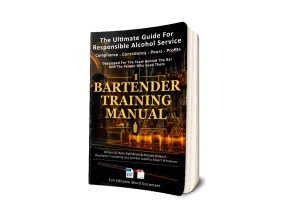
For the complete bartender training system – the operator-grade manual that covers everything from onboarding through incident management – see The Ultimate Responsible Alcohol Service Manual on bartendertrainingmanual.com. For the pillar content on bartender training for new bars specifically, see Bartender Training for New Bars.
First Ninety Days of Operation
Opening is not the finish line. It is the starting line for the ninety-day period that determines whether the bar survives year one.
Week 1: Stabilization
- Monitor service quality under real customer volume
- Identify and fix workflow issues
- Adjust staffing levels based on actual traffic patterns
- Collect and triage customer feedback
Weeks 2-4: Optimization
- Refine drink menu based on actual sales
- Adjust pricing if warranted by early data
- Refine staffing schedule to match real demand
- Begin loyalty and regular customer program if applicable
Months 2-3: Establishment
- Build regular customer base
- Establish community presence and marketing rhythms
- Refine cost controls as patterns emerge
- Address any operational issues revealed by early operations
- Evaluate and adjust against first-year projections
The Common Failure Modes
Bars that fail in their first two years typically fail for predictable reasons:
- Underfunded - opened with inadequate working capital cushion
- Wrong location - concept mismatch with neighborhood
- Weak concept - could not differentiate from competitors
- Licensing delays that ate operating capital during waiting period
- Staffing crisis - could not retain quality staff
- No operational discipline - cash controls, inventory, labor all loose
- Founder burnout - did not structure sustainable ownership role
Most of these failure modes are preventable with proper Phase 1 and Phase 2 work. The business plan and critical path resources on opena.bar exist to prevent them.
State-Specific Considerations
Every state has its own regulatory landscape for bar ownership. Two of the largest markets have dedicated pages:
Additional state-specific pages will be added based on reader demand. For states not covered yet, the general licensing framework on Bar Permits and Licenses provides the structural approach.
Getting Started
The right starting point depends on where you are in the process:
- If you are still refining the concept: spend more time in Phase 1 before anything else
- If the concept is solid and you need a plan: go to the Bar Business Plan Guide pillar
- If you have a plan and need the working documents: the Bar Business Plan product is the complete deliverable
- If you need the numbers first: start with Startup Costs pillar
- If you have funding and need execution tracking: start with Critical Path Checklist
- If you are weeks from opening and need staff training: Bartender Training for New Bars
Related Resources
Critical Path Checklist pillar →execution tracking
Bar Business Plan Guide pillar →the planning layer
Bar Business Plan (product) →the complete plan document
Bar Startup Costs pillar →the numbers
Bartender Training for New Bars →the staffing layer
Open a Bar Founder Bundle →the complete system
Ryan Dahlstrom
Author & Expert Witness
20+ years of hospitality operations. Author of The Ultimate Responsible Alcohol Service Manual and The Bar Starts Here.
12 Month Financial Summary
A one-page editable outline of the four-phase framework. Adapt it for your venue.
Start with the plan that gets your bar funded.
The Bar Business Plan is the planning side of 20+ years of bar operating experience — structured to the questions lenders, investors, and landlords actually ask.