

Most bar openings do not fail from missing tasks. They fail from missing dependencies. Build-out started before permits were approved. Equipment ordered before the space was measured. Staff hired before training materials were finalized. Marketing launched before the liquor license was active. Each error creates downstream delays that compound and consume operating capital before revenue begins.
A critical path checklist is different from a task list. A task list is what needs to get done. A critical path checklist is the sequence in which it must get done, and the dependencies that make each step possible. This page covers the complete critical path from concept through opening day, organized around the real dependencies that determine whether an opening happens on time.
Most existing online ‘bar opening checklists’ are daily shift-opening checklists for bartenders (open the bar, stock the wells, count cash). This page is the opposite – the opening-the-bar-for-the-first-time checklist that only applies to founders.
Consider a simple example. You need to order bar equipment. Before you order bar equipment, you need final drawings of the bar. Before you have final drawings, you need the designer working with the build-out contractor. Before the contractor can work, the space needs final measurements. Before measurements are useful, the lease needs to be signed with specific terms on what you can modify. Before the lease can be finalized, the liquor license needs to be confirmed available at that address.
Five dependencies back from ordering equipment, you are confirming liquor license availability. Most founders try to compress this chain by doing things in parallel. Some parallelization works. Some does not. Knowing the difference is the critical path skill.
The opening critical path moves through six phases, each with its own primary dependencies and its own exit criteria before the next phase can begin.
Exit criterion: concept defined with enough specificity that a commercial real estate broker can source appropriate locations and a commercial lender can evaluate a hypothetical loan.
Cannot proceed to Phase 2 without Phase 1 complete. Trying to do business plan work on an unlocked concept produces a business plan that requires rework when the concept shifts.
Exit criteria: business plan complete, funding secured or committed, startup capital available for Phase 3 costs.
For the complete Bar Business Plan that supports this phase, see the Bar Business Plan product page.
Exit criteria: lease signed with terms that support the concept and the build-out plan.
Signing a lease triggers the cost clock. Every day after lease signing costs money whether or not the venue is producing revenue. Phases 4 and 5 must move efficiently once Phase 3 completes.
Exit criteria: all licenses approved, build-out substantially complete, equipment installed, utilities active.
This phase runs two parallel tracks with cross-dependencies:
Track A and Track B interact. You cannot get occupancy certificate without build-out complete. You cannot pour alcohol without liquor license. You cannot hold food in temperature-controlled conditions without health permit. Sequence these in coordination, not independently.
Exit criteria: fully staffed, trained, and operationally ready team running service at expected volume.
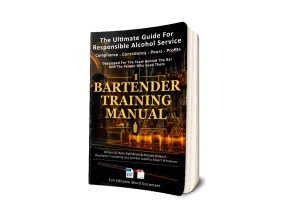
For the complete bartender training system, see The Ultimate Responsible Alcohol Service Manual on bartendertrainingmanual.com. For staffing guidance specific to new bar openings, see Bartender Training for New Bars.
Final preparation before opening day.
Certain dependency failures recur across many bar openings:
State and local liquor licensing takes weeks to months. Applications submitted late delay opening. Incomplete applications cause rejection and further delays. Address before Phase 4 begins, not during.
Building permits can take 6-12 weeks in some jurisdictions. Construction cannot begin without them. Factor the permit approval timeline into the overall schedule.
For food service venues, health department inspection is the final gate before occupancy. Schedule early and understand what they will check. Common failures: grease trap installation, hand-wash station placement, food-contact surfaces.
Bar equipment can have lead times of 8-16 weeks. Order as soon as drawings are approved, not when construction is complete. Storage during construction is manageable.
Waiting to hire until build-out completes leaves inadequate training time. Hiring quality staff in hospitality tight labor markets takes weeks, not days. Begin management hiring in Phase 4, line staff hiring early Phase 5.
Inadequate training time forces launches with undertrained staff, producing service problems in week one that create lasting reputation damage. Protect minimum three weeks of structured training.
A comprehensive PDF version of this critical path checklist – with all six phases laid out in checkbox format, date-stamped for your specific opening target – is available as a free download. Enter your email below to receive it.
How to Open a Bar pillar →the overall framework
Bar Permits and Licenses →detailed licensing coverage
Liquor License Cost for a Bar →cost specifics
Bar Opening Checklist PDF →additional checklist resources
Bar Business Plan Guide →the planning layer
Bar Business Plan (product) →the complete planning document
Ryan Dahlstrom
Author & Expert Witness
20+ years of hospitality operations. Author of The Ultimate Responsible Alcohol Service Manual and The Bar Starts Here.
12 Month Financial Summary
A one-page editable outline of the four-phase framework. Adapt it for your venue.
The Bar Business Plan is the planning side of 20+ years of bar operating experience — structured to the questions lenders, investors, and landlords actually ask.