

New bars require more intensive bartender training than established venues. There is no existing team for new hires to learn from. There are no operational patterns to absorb through osmosis. Every procedure must be explicitly trained. And the training must happen in the three weeks before opening, not gradually over months.
This page covers the complete approach to training bartenders for a new bar opening – curriculum structure, delivery timeline, certification process, and the documentation that protects the venue once operations begin.
Structured training before opening typically runs three weeks with a fourth week of soft opening operations. Compressed training below three weeks produces undertrained staff and opening-week service problems.
Not all training content has equal weight. Priorities:
Structured bartender training requires training materials. New bar founders have two options:
Typically requires 100-200 hours of founder or GM time plus legal review. Produces venue-custom materials. Appropriate for venues with highly unique concepts, multi-unit operators, or chains requiring proprietary training.
Purchase an operator-grade training manual and customize for the venue. Typically 10-20 hours of customization. Immediate training infrastructure. Appropriate for most new bar openings.
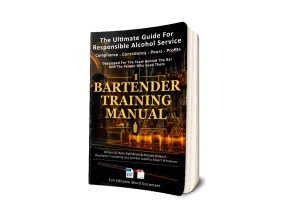
Most new bar founders choose Option B because they do not have 100+ hours of pre-opening time available. The Ultimate Responsible Alcohol Service Manual authored by Ryan Dahlstrom is the operator-grade training document most new bar founders use – 140 pages, 23 chapters, customizable with [COMPANY NAME] placeholders, built to legal-defensible documentation standards. Available at bartendertrainingmanual.com.
Most states require alcohol server certifications (TIPS, ServSafe Alcohol, state-specific programs). These certifications are for individual bartenders. They are not substitutes for the venue’s internal training program.
Responsible new bars maintain both:
The internal training program defines venue-specific standards, enforcement protocols, and accountability structures that state certifications do not cover.
At end of Week 3, each bartender should be formally certified to serve alcohol independently:
Undocumented certification does not exist from a regulatory or insurance perspective. The documentation protects the venue if incidents occur in early operations.
For the complete bartender training system – the 140-page manual that covers every topic mentioned above plus incident reporting, crisis management, manager responsibilities, and continuing education – see The Ultimate Responsible Alcohol Service Manual on bartendertrainingmanual.com.
For new bar founders who want the complete opening system including the training manual plus business plan, startup cost spreadsheet, and critical path checklist, see the Open a Bar Founder Bundle.
Bartender Training for New Bars →the pillar framework
Bartender Onboarding Checklist →Phase 1 specifics
The Ultimate Responsible Alcohol Service Manual→complete training document
Open a Bar Founder Bundle→complete operating system
Ryan Dahlstrom
Author & Expert Witness
20+ years of hospitality operations. Author of The Ultimate Responsible Alcohol Service Manual and The Bar Starts Here.
12 Month Financial Summary
A one-page editable outline of the four-phase framework. Adapt it for your venue.
The Bar Business Plan is the planning side of 20+ years of bar operating experience — structured to the questions lenders, investors, and landlords actually ask.